The BEST Fantasy Football Draft Strategy of 2026
STACKED extracted the fantasy-relevant player signal from this video and kept the full transcript here for context.
Player insights
Alvin Kamara
Ian Hartitz identifies Alvin Kamara as a running back with flex benefits potential in the mid-round range, suggesting he has some upside as a flex option rather than a primary back.
Insight pageBaker Mayfield
Late-round QB option; Ian Hartitz references Mayfield as part of potential 'Boomer Sooner reunion' with Kyler Murray on same fantasy team, suggesting both are available late enough to stack together. Also available as a second-to-last round dart throw option, illustrating the depth of quarterback availability in late rounds.
Insight pageBlake Corum
Corm is an elite handcuff option available in the RB3/RB4 range; Hartitz groups him with Kyle Mungai as elite handcuff options that can be acquired late and provide waiver wire upside if injury occurs to the starter.
Insight pageHartitz locks in Blake Corum as a running back in his draft strategy, noting he is more than just a handcuff and has significant upside if Keon Williams gets injured; Corum could become a must-start top-five running back on a weekly basis, making him a valuable pick despite being a backup.
Insight pageBo Nix
Bo Nix went in mid-round 11 in Hartitz's mock draft, demonstrating the depth of quarterback availability when waiting until round 10 or later. This supports Hartitz's late-quarterback strategy, where quality starters remain available deep into the draft.
Insight pageBrock Bowers
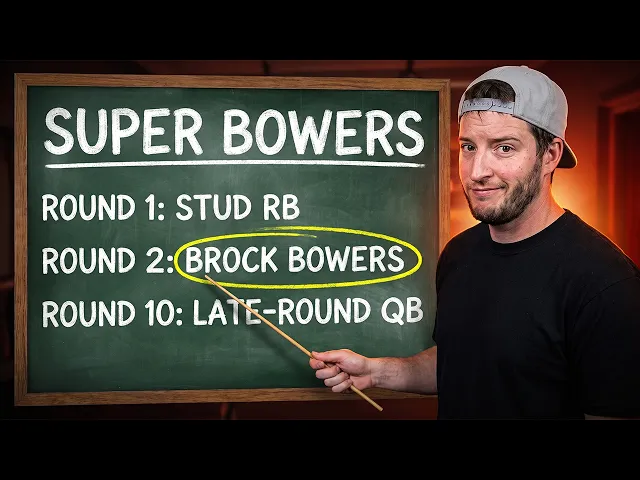
Ian Hartitz advocates for Brock Bowers as a Round 2 draft target in his 'Super Bowers' strategy, citing one of the best rookie tight end seasons ever (comparable to Mike Dicka in 1960), OPOY upside, and TE2 PPR production despite playing through a PCL injury last season. Hartitz emphasizes Bowers' situation fits "like a glove"—a bad offense and trailing game script with limited wide receiver options create target concentration similar to past tight end breakouts like Trey McBride and Harold Fannon. The thesis rests on tight ends' historical ability to overcome bad offenses (24 of top 12 fantasy performers from bottom-10 scoring offenses over the past decade). Hartitz expresses strong preference, stating "I want Brock freaking Bowers" rather than waiting on a late-round tight end, and prioritizes him around pick 17–18 or earlier in Round 2 over late-round QB/TE options. The strategy pairs Bowers with a stud RB in Round 1, then targets WRs in Rounds 3–6, allowing flexibility to wait on late-round QBs where QB 10 and QB 17 converge by season's end. In mock drafts, Hartitz consistently selected Bowers in Round 2, demonstrating his core role in the strategy.
Insight pageBrock Purdy
Ian Hartitz identifies Brock Purdy as a quarterback with strong efficiency throughout his career, describing him as 'so freaking good every single time.' Hartitz considers Purdy to be in a range where you don't have to prioritize quarterback early, and took him in round 10, feeling fine about the selection. This suggests Purdy is a late-round quarterback option with acceptable value and strong confidence in his fantasy outlook.
Insight pageBucky Irving
Ian Hartitz characterizes Bucky Irving as a backup or secondary running back, noting he 'is going to be between their 20s running back,' suggesting limited role and production potential.
Insight pageChris Godwin
Ian Hartitz notes Chris Godwin is 'probably too cheap,' indicating his ADP undervalues his talent and represents a buying opportunity. Godwin was available in round 10 of this mock draft and is highlighted as a player who could 'really freaking help you' compared to taking a quarterback at that position, positioning him as a strong value target in that range.
Insight pageChristian McCaffrey
Ian Hartitz drafted McCaffrey in round 2 with confidence, stating 'ain't no such thing as curses,' dismissing prior injury or narrative concerns. Hartitz positions McCaffrey as a cornerstone RB1 in multiple draft strategies, including a 'Super Bowers' approach pairing him with Devonte Henry at RB2 in round three. Despite hedging with handcuff options (Kalin Black, Mike Washington) to protect against injury risk, Hartitz views McCaffrey as a primary running back with strong upside, creating a foundation that allows flexibility to wait on wide receiver depth and quarterback.
Insight pageChristian Watson
Ian Hartitz drafts Christian Watson in round six as his preferred Packers wide receiver option, explicitly stating 'I want Christian Watson over those guys' and noting 'That's a good problem to have,' indicating strong conviction in his value and role in the Packers offense at that draft stage.
Insight pageD'Andre Swift
Ian Hartitz identifies DeAndre Swift as one of only two running backs he is willing to target in rounds 3-6, alongside Tud, as he avoids most other backs in this range due to injury concerns or dead zone profiles. Swift is also presented as a late-round running back option available two rounds after round three, offering depth at the position as part of Hartitz's overall draft strategy that prioritizes early bellcows and late-round flexibility.
Insight pageDavante Adams
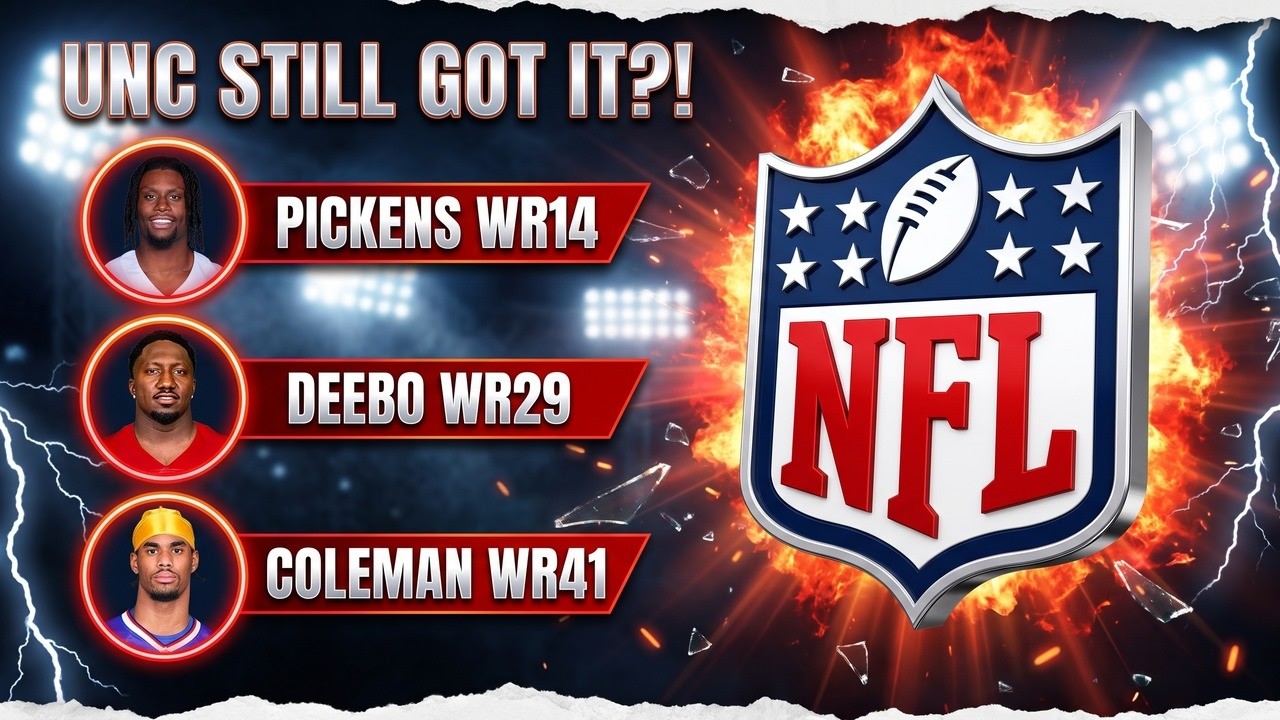
DeVante Adams is part of the "UNC tier" of wide receivers that Hartitz expects to be ranked significantly higher by Week 1 than current market pricing suggests, representing value in rounds 3-6.
Insight pageIan Hartitz drafts Davante Adams in round five as part of a three-receiver run, noting a 'pretty big gap in ADP' relative to other receivers, supporting his selection in the mid-rounds. Adams is later selected again in the 'Super Bowers' draft strategy alongside Stefon Diggs and Jaylen Watson, emphasizing strong wide receiver depth to complement elite running back and tight end positioning.
Insight pageDavid Montgomery
Ian Hartitz avoids David Montgomery in rounds 3-6 as part of a group of running backs with dead zone profiles where volume is uncertain and offensive situation quality is questionable. However, Montgomery is presented as a late-round running back option available two rounds after round three, offering depth at the position as part of Hartitz's overall draft strategy that prioritizes early bellcows and late-round flexibility.
Insight pageDeebo Samuel
Hartitz lists Deebo Samuel among wide receivers available in round 10, questioning whether he would feel good taking a receiver at that point in the draft.
Insight pageDeVonta Smith
DeVonta Smith is identified as a potential early Round 3 wide receiver target if available, positioned in the WR2/WR3 tier that Hartitz prioritizes in Rounds 3–6 of his draft strategy.
Insight pageDK Metcalf
DK Metcalf was available in round 10 in Hartitz's mock draft and is highlighted as a player who could 'really freaking help you' compared to taking a quarterback at that position. He's grouped with Jonathan Brooks, Rico Dotson, Jordan Tyson, and Chris Godwin as strong value options in that range.
Insight pageHarold Fannin
Harold Fannon is cited as a historical example of a tight end who overcame a bad offense and trailing game script to rack up consistent targets despite not being a prospect who 'came out of nowhere.' This pattern supports the thesis that elite tight ends can produce in poor offensive environments, a key argument for Brock Bowers' 2026 upside.
Insight pageJ.K. Dobbins
Handcuff option available in RB3/RB4 range; Ian Hartitz mentions Dobbins alongside Tony Pollard as alternative handcuff picks in this draft range for those seeking late-round backup RB upside.
Insight pageJacob Cowing
Hartitz describes Jacobe Cowing as a solid football player, indicating he views him as a viable draft option.
Insight pageJahmyr Gibbs
Ian Hartitz drafts Jahmyr Gibbs as his RB1, then later handcuffs him with Peco, stating 'now I got his handcuff. Now our RB1 spot's really secure,' indicating he values the security of handcuffing his own primary back in a smaller league format.
Insight pageJalen Hurts
Hartitz highlights Jalen Hurts as going in the same round as Tyler Shuck and Kyler Murray in the Super Bowers mock draft strategy, which he loves about the approach, indicating exceptional value. Hurts in round 13 is characterized as probably better value than taking a quarterback earlier, suggesting this represents an efficient use of draft capital.
Insight pageJames Cook
James Cook went early in Hartitz's second mock draft, which Hartitz characterizes as 'a little bit wild,' suggesting the running back is being overdrafted relative to his value. Hartitz also notes that Ray Davis serves as Cook's handcuff and is positioned as an attractive late-round stash option if Cook gets injured.
Insight pageJared Goff
High-caliber QB available after pick 120; Ian Hartitz emphasizes Goff's quality with 'Jared Freaking Goff' to highlight the strength of late-round QB options. Hartitz successfully targets Goff after pushing QB selection later than usual, stating 'And guess what? I got Jared Goff. I'll double tap it,' emphasizing the value of waiting on QB and still securing a top-tier option.
Insight pageJavonte Williams
Hartitz targets Williams as a Cowboys bellcow in round three, projecting he 'could certainly finish inside the top 12 like he did last year,' indicating confidence in his RB1 upside at that draft position. Williams is identified as the primary running back with Jaden Blue as his RB2 handcuff; the strategy emphasizes stashing Blue as a late-round option to avoid taking a kicker or defense. Ian Hartitz identifies Javante Williams as the right round-three running back target; explicitly states he is 'absolutely fine signing up for' him in round three, positioning him as a preferred option over Jets or Cardinals in that round.
Insight pageIan Hartitz includes Javonte Williams in his core running back group alongside Christian McCaffrey, Rico Dowdle, and Jordan Mason in his mock draft, indicating confidence in Williams as a primary RB option in his draft strategy.
Insight pageJayden Reed
Ian Hartitz identifies Jaden Reed as a receiver he likes in the mid-rounds with sleeper potential, as long as the Colts don't sign Keenan Allen, which would reduce Reed's target share.
Insight pageJaylen Waddle
Ian Hartitz ranks Jaylen Waddle inside his top-15 wide receivers and targets him in rounds 3-6 as part of a WR2/WR3 tier. Hartitz acquired Waddle alongside Nico Collins and Zay Flowers—three top-15 WRs—without using a top-two round pick, demonstrating strong value at his ADP. Hartitz prefers Waddle over Zay Flowers citing ADP tightness, drafting him in round four as part of a three-receiver run (Waddle, Adams, Watson). He expresses strong confidence in Waddle as a core wide receiver, stating he feels 'really, really, really good' about Waddle holding down the receiver position alongside Nico Collins, Zay Flowers, and Parker Washington.
Insight pageJaylen Warren
Warren is projected by Hartitz to supply low-end RB2 production in rounds 7-10, benefiting from the Steelers' aging quarterback situation and limited offensive weapons; one injury away from workhorse upside. Hartitz calls the Steelers running backs his favorite bets among ambiguous RB3/RB4 backfields.
Insight pageJonathon Brooks
Brooks has rising hype; Hartitz notes he might be a round two pick by August as the hype train continues, but currently fits in the RB3/RB4 range in drafts. Positioned as a potential breakout candidate with ADP likely to rise. In the mock draft, Brooks was available in round 10 and is highlighted as a player who could 'really freaking help you' compared to taking a quarterback at that position.
Insight pageJordan Love
Jordan Love went very late in Hartitz's mock draft, demonstrating the availability of quality quarterbacks when waiting until the later rounds. This supports the late-quarterback strategy where elite and solid starters remain available deep into drafts.
Insight pageJordan Mason
Mason is positioned as a smash pick for the Vikings; Vikings and Jets running backs were tied for fifth fewest running back carries inside the 5-yard line last season, creating opportunity for improvement. With better QB play than JJ McCarthy and Kyler Murray linking up with Kevin O'Connell, Mason could see increased volume. Vikings insider Matthew Coller reports it is expected to be the Jordan Mason show after Aaron Jones got the first run last season. Hartitz targets Mason in Half PPR format, noting 'a little bit of an allure for him as well,' indicating he sees value at his draft position.
Insight pageJordyn Tyson
Jordan Tyson was available in round 10 in Hartitz's mock draft and is highlighted as a player who could 'really freaking help you' compared to taking a quarterback at that position. He's grouped with Jonathan Brooks, Rico Dotson, Chris Godwin, and DK Metcalf as strong value options in that range.
Insight pageJosh Downs
Ian Hartitz identifies Josh Downs as a wide receiver he likes despite noting 'wonky stuff in ADP' across the position, suggesting Downs represents value relative to market expectations; he also mentions Downs as a mid-round sleeper option.
Insight pageJosh Jacobs
Josh Jacobs is noted to be 'in some legal stuff right now,' creating uncertainty around his availability and fantasy value. Ian Hartitz positions Marshon Lloyd as his handcuff option to hedge this risk. Hartitz conditionally endorses Jacobs as a round-three option, stating 'If we got clarity on the Jacobs legal situation, I'd be very much fine taking him in round three. But we don't right now,' indicating willingness to draft him once legal matters are resolved but current hesitation pending clarity.
Insight pageJustin Herbert
QB available in round nine; Ian Hartitz loves Herbert at that ADP, contrasting favorably with waiting for elite QBs like Patrick Mahomes in round 13. Hartitz illustrates the inefficiency of early QB selection and his rule to avoid drafting QBs before round 10, yet still expresses strong affinity for Herbert at round nine pricing. Later notes he loves Herbert this year, indicating positive 2026 fantasy outlook.
Insight pageKeaton Mitchell
Mitchell's role is analyzed as potentially stable; the source suggests 'I could see them actually not changing Katon's role,' implying his role may remain unchanged even if a backup like Vidal is preferred as a handcuff option.
Insight pageKyler Murray
Late-round QB option with dual-threat upside; Ian Hartitz references Murray as part of potential 'Boomer Sooner reunion' with Baker Mayfield on same fantasy team, suggesting both are available late enough to stack together. Hartitz pairs Murray with Jared Goff as a late-round QB for 'extra upside,' indicating he views Murray as a valuable secondary QB option that provides rushing upside without draft capital cost. Also available as a second-to-last round dart throw option.
Insight pageLadd McConkey
Lad McConkey is a Round 3 target for Hartitz in the WR2/WR3 tier, expected to be available after avoiding the PUP list and returning by Week 1 or shortly thereafter.
Insight pageMalik Willis
Late-round QB option with rushing upside; Ian Hartitz recommends using two QB bullets late in the draft on Willis and Tyler Shuck to lean into rushing upside. Willis isn't even going to get drafted in this mock, showing the abundance of quarterback options available in late rounds.
Insight pageMatthew Golden
Ian Hartitz expresses reluctance about relying on Matthew Golden as a starting wide receiver, citing concerns about having too many unproven receivers in the lineup; he prefers to secure proven WR talent earlier in the draft rather than depend on Golden and similar mid-tier options.
Insight pageMatthew Stafford
High-caliber QB available after pick 120; Ian Hartitz guarantees Stafford will be available in mock drafts after the first 120 picks, exemplifying the depth of late-round QB options. Hartitz drafted Stafford in round 10 as part of his late-QB strategy, consistent with his philosophy of waiting on the position until round 10 or later.
Insight pageMichael Pittman
Ian Hartitz groups Michael Pittman among wide receivers he does not want to rely on as starters, preferring to secure proven talent earlier in the draft to avoid depending on mid-tier options.
Insight pageMike Evans
Ian Hartitz identifies Mike Evans as part of the 'UNC tier' of wide receivers expected to be ranked significantly higher by Week 1 than current market pricing suggests, representing value in rounds 3-6.
Insight pageMike Washington Jr.
Late-round RB2 handcuff option; Ian Hartitz recommends targeting Washington, Tank Bigsby, and Ray Davis as injury-away-from-being-instant-starters in rounds 7–10 and beyond, filling out the RB2 spot with handcuff running backs rather than late-round wide receivers.
Insight pageNico Collins
Nico Collins available in round three at ESPN ADP is characterized by Ian Hartitz as an 'absolute steal,' with Collins ranked inside Hartitz's top 15 wide receivers. This allows Hartitz to acquire three top-15 WRs (Collins, Zay Flowers, Jaylen Waddle) without using a top-two round pick. Hartitz expresses strong confidence in Collins as a core wide receiver in his draft strategy, stating he feels 'really, really, really good' about Collins holding down the receiver position alongside Flowers, Waddle, and Parker Washington.
Insight pageParker Washington
Ian Hartitz moved Parker Washington up to wide receiver 27 in his rankings, citing strong late-season production: 'he was balling out down the stretch last year. 19.1 PPR points per game in the Jaguars final five games.' Hartitz compares him to 'this generation's Miles Austin' and calls him 'Great great value here,' indicating breakout potential. He expresses strong confidence in Washington as a core wide receiver, stating he feels 'really, really, really good' about Washington holding down the receiver position alongside Nico Collins, Zay Flowers, and Jaylen Waddle. Washington is identified as a potential breakout candidate who could 'really in a major way break out this year'; if the breakout doesn't materialize, he still functions as a solid flex option.
Insight pagePatrick Mahomes
Elite QB available in late rounds (round 10-13 range); Ian Hartitz uses Mahomes as the exemplar of premium quarterback talent available after pick 120, contrasting with round nine Justin Herbert to illustrate the value advantage of late-round QB strategy. Mahomes went in round 10 in Hartitz's mock draft, aligning with the recommended strategy of not drafting a quarterback before round 10.
Insight pageRashid Shaheed
Ian Hartitz states 'I do like Rashid Shahed' when selecting another wide receiver in the draft, indicating he views Shahed as a worthwhile pick at that stage despite earlier skepticism about round 10 wide receiver options.
Insight pageRay Davis
Late-round RB2 handcuff option; Ian Hartitz recommends targeting Davis, Tank Bigsby, and Mike Washington as injury-away-from-being-instant-starters in rounds 7–10 and beyond, filling out the RB2 spot with handcuff running backs rather than late-round wide receivers. Davis is identified as a handcuff to James Cook who is 'looking good,' making Davis an attractive late-round stash to avoid taking a kicker or defense and instead load up on handcuff running backs.
Insight pageRico Dowdle
Ian Hartitz expresses strong preference for Rico Dowdle at his draft price, describing him as a 1A/1B option in the Eagles backfield and stating 'Love me some Rico at that price,' indicating the running back is undervalued relative to his role share in the offense.
Insight pageSaquon Barkley
Ian Hartitz avoids Saquon Barkley in rounds 3-6 due to coming off devastating injuries and playing in a bad offense, representing a dead zone profile where volume upside is uncertain. Hartitz references Barkley's injury history as context for handcuff strategy, noting that if Saquon 'stays healthy, he's not going to do much' (referring to Tank Bigsby's value), and later mentions Saquon as a player whose injury would elevate late-round RB values.
Insight pageStefon Diggs
Ian Hartitz expresses skepticism about wide receiver value in round 10, specifically questioning whether he would feel good drafting Stefon Diggs (among Shakur, Debo, Shahed, Higgins, Coker, Diggs) at that stage. When asked if he'd feel good looking at wide receiver in round 10, Hartitz states 'I don't,' indicating these receivers don't stand out as compelling values at that ADP. However, Diggs was selected in the 'Super Bowers' draft strategy as part of strong wide receiver depth (Diggs, Adams, Watson, Parker Washington) to complement elite running back and tight end positioning, though Hartitz notes the wide receiver group may be 'a little bit overkill' with one flex spot.
Insight pageTank Bigsby
Late-round RB2 handcuff option; Ian Hartitz recommends targeting Bigsby, Mike Washington, and Ray Davis as injury-away-from-being-instant-starters in rounds 7–10 and beyond, filling out the RB2 spot with handcuff running backs rather than late-round wide receivers. Hartitz targets Bigsby as a handcuff, acknowledging that if Saquon Barkley stays healthy Bigsby won't produce much, but positioning him as a valuable handcuff option in this draft range.
Insight pageTee Higgins
Hartitz lists Tee Higgins among wide receivers available in round 10, questioning whether he would feel good taking a receiver at that point in the draft.
Insight pageTerry McLaurin
Ian Hartitz identifies Terry McLaurin as part of the 'UNC tier' of wide receivers expected to be ranked significantly higher by Week 1 than current market pricing suggests, representing value in rounds 3-6.
Insight pageTony Pollard
Ian Hartitz selected Tony Pollard as a preferred running back in his draft strategy, stating 'Give me Tony Pard. Screw it,' indicating confidence in his value. Hartitz was 'Pretty surprised to see' Tony Pollard available at his draft position, suggesting Pollard fell further than expected in the mock draft.
Insight pageTravis Etienne
Ian Hartitz consistently avoids Travis Etienne in rounds 3-6 as part of his strategy to skip backs with uncertain volume and dead zone profiles in this draft tier. However, Hartitz notes that Etienne 'continues to creep down' in ADP and would be 'cool to at the end of round five,' suggesting Etienne offers value as his ADP declines.
Insight pageTrevor Lawrence
Trevor Lawrence was drafted in round 9 in Ian Hartitz's mock draft. Hartitz's late-quarterback strategy recommends waiting until round 10 or later, when elite options like Mahomes, Purdy, and Stafford are available. Lawrence going in round 9 represents reaching on the position earlier than the recommended approach.
Insight pageTrey McBride
Trey McBride is cited as a historical example of a tight end who overcame a bad offense and trailing game script to rack up consistent targets despite not being a prospect who 'came out of nowhere.' This pattern supports the thesis that elite tight ends can produce in poor offensive environments, a key argument for Brock Bowers' 2026 upside.
Insight pageWoody Marks
Ian Hartitz identifies Woody Marks as a running back with flex benefits potential in the mid-round range, suggesting he has some upside as a flex option rather than a primary back.
Insight pageZay Flowers
Zay Flowers is included in Hartitz's WR2/WR3 tier targets for Rounds 3–6. Hartitz expresses strong confidence in Flowers as a core wide receiver in his draft strategy, stating he feels "really, really, really good" about Flowers holding down the receiver position alongside Nico Collins, Jaylen Waddle, and Parker Washington.
Insight page