Fantasy Football with Ian Hartitz
Ian Hartitz fantasy football YouTube videos
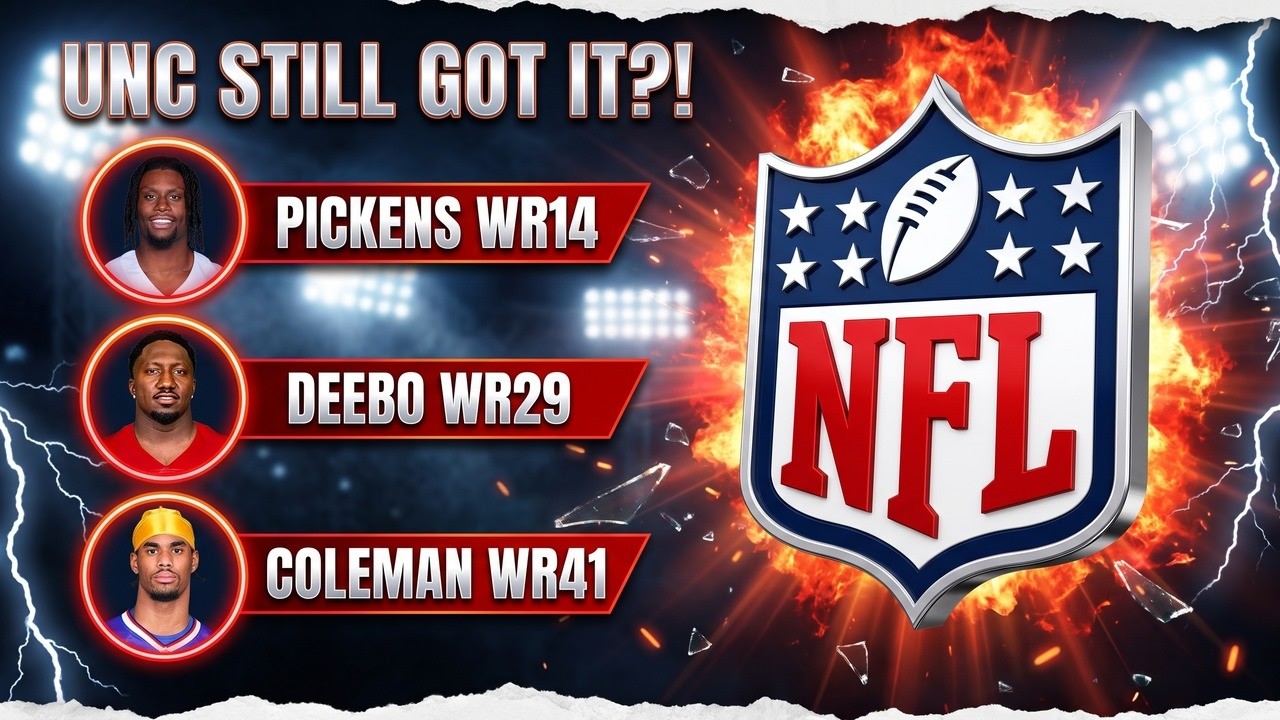
Week 5 Fantasy Football WR Ranks and Tiers: George Pickens BOOM week, Keon Coleman propaganda, MORE
More videos






















Latest player insights
Wide receiver 19; facing Seahawks, who have allowed only the Chiefs fewer PPR points per game to opposing wide receivers this season. Mike McDonald's defense typically brings out the worst in receivers. Last week Evans was tackled at the one-yard line on one play and was open for a touchdown after beating coverage before leaving the game; Brock Purdy had a rare miss. Recommendation: start him unless incredibly gifted at alternatives, but matchup against Seahawks is not the world's easiest.
Ranked WR30 by Ian Hartitz. Washington has received 19 combined carries and targets over the last two weeks with Devon Han out of the picture, getting force-fed the football. Hartitz compares his role to a Jarvis Landry rookie-year or Jaylen Wadd situation where he's being force-fed opportunities. While the viewing experience isn't ideal and he shouldn't be the engine of the entire offense (comparing him unfavorably to Luther Burden's role), he is making the most of his opportunities and producing fantasy points in PPR formats.
Wide receiver 22-23 going against Packers; felt disappointing this year but is WR25 even with underperformance; has 60+ yards in three or four games; tied with Malik Washington for most tackles avoided at the position. Packers defense is not great (24th per drop back), just lost Ed Cooper, not getting Michael Parsons back anytime soon. Looks good with football in hands; with backup QBs Bean and Case Keenum in the picture, getting more designed quick-look, quick-read targets than ever, and those PPR points add up quickly.
Wide receiver 19 overall; moves up to wide receiver 12 on a per-game basis. Was regularly being treated outside the top 50 wide receivers in preseason rankings, representing significant ADP value.
Ranked WR20 against the Rams on Monday Night Football. All usage and efficiency metrics have been strong with Josh Allen throwing, but concern is shoulder injury. Tough matchup against Trent McDuffie and the Rams, who have not allowed a single wide receiver to gain over 50 yards this season (Marcus Robinson got exactly 50). Despite matchup difficulty, 54.5-point game total provides upside; recommendation is to get DJ Moore in lineups despite the shoulder concern.
Ranked WR31 by Ian Hartitz, who notes he could be bumped up a few spots. Tate posted 145 yards in week four against the Ravens in a game where Cam Ward played a 'more good version' of himself, getting back to the off-script plays that defined his rookie season. Derek Stinley hasn't been trailing opposing number-one receivers consistently (spending 79% of snaps on the outside left), and offenses are feasting on Kamari Lacier (fourth most receptions allowed, sixth most yards allowed), suggesting Tate should be able to get away from Stinley and see 8-10 targets as a top-four overall pick.
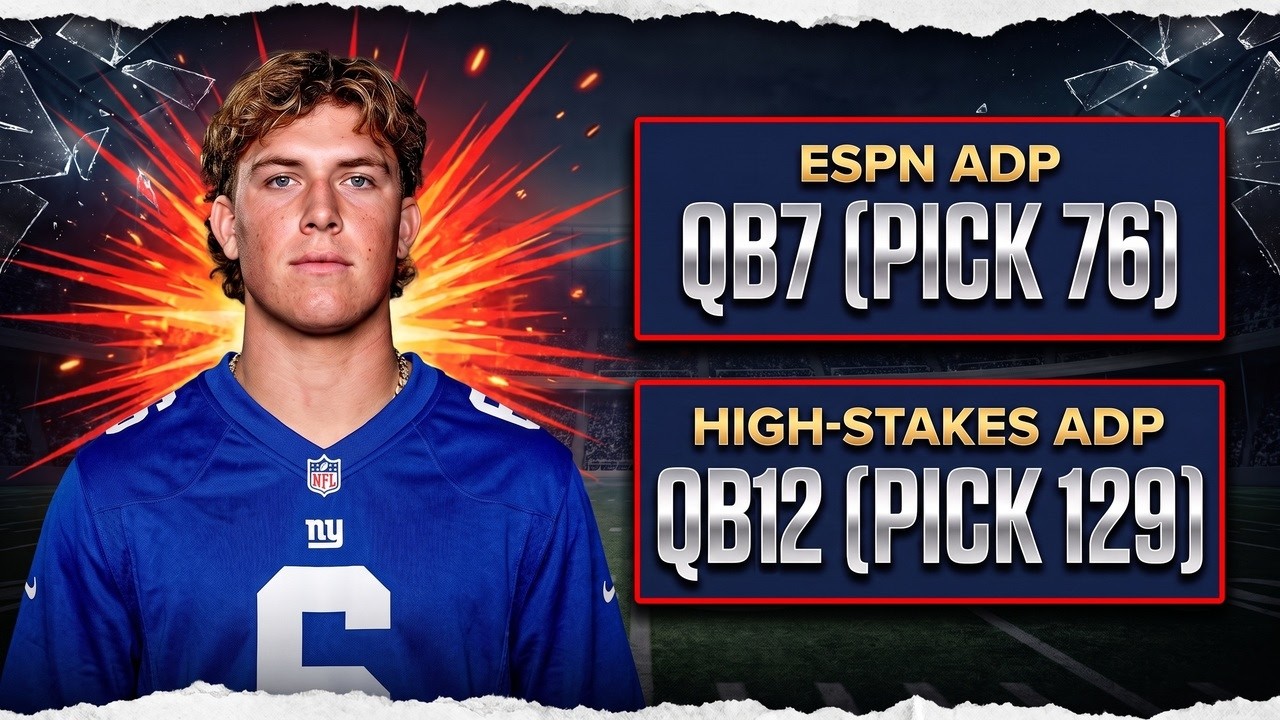
The Giants' quarterback whose play quality will determine whether the team can capitalize on their easiest upcoming wide receiver schedule in weeks 5-10.
Out with an ankle injury, leaving Jaylen Wadd and Courtland Sutton as the primary receivers for the Broncos.
Ranked WR37 with career-worst performance across every statistical measure; among 45 qualified wide receivers, ranks eighth-worst in separation and has fewer yards per route run than only Marvin Harrison Jr., Mai Lemon, and Bryce Lance. With Pat Bryant out with an ankle injury, it will be the Jaylen Wadd and Courtland Sutton show, but Sutton's poor metrics and the broken Broncos offense make him a low-end WR2 at best. Ian Hartitz is not going out of the way to get him in fantasy lineups. Sutton looks washed; every single number shows career-worst performance by far.
Among the worst in yards per route run, ranking alongside Marvin Harrison Jr. and Mai Lemon in this inefficient metric among qualified wide receivers.
Capable of making sweet throws over the middle between defenders, but his limited target distribution to Jacobe Meyers (three to four targets per game) constrains receiver upside.
Ranked as WR34 with upside as a boom-or-bust play. Raiders offense profiling as more fantasy-friendly than expected with Kirk Cousins playing well and the offensive line struggling in the run game, forcing more passing volume. Jaylen Naylor likely joining Jack Bash on the sideline and Christian Gonzalez potentially out with a shoulder injury could open targets, though Brock Bowers and Michael Mayer could compete for targets in any given week.
Could have more targets than Trey Tucker in any given week as the Raiders' offense leans more heavily on passing with Kirk Cousins.
Playing great ball for the Raiders, supporting a more fantasy-friendly passing offense than expected despite the offensive line's struggles in the run game.
Primary tight end target for the Raiders with Kirk Cousins, though Michael Mayer could compete for targets in any given week as the offense leans more heavily on passing.
Out with a groin injury, impacting the Giants' passing game by making it easier for defenses to stack the box against Jonathan Taylor and limiting opportunities for slot receivers like Josh Downs.
Ranked WR33 against the Steelers by Ian Hartitz. Hartitz is reacting to Daniel Jones' historically poor performance (37.4 QBR on a 100-point scale, averaging 5.7 yards per attempt—only Jacoby Brissett is worse). Jones is coming back from an Achilles injury and doesn't have his 'nine figure field stretcher' (referring to Saquon Barkley). Keenan Allen was also out with a groin injury, making it easy for defenses to stack the box and limiting Downs' upside. While Downs could theoretically benefit from more downfield targets, his 5'8", 170-pound frame limits upside against the Steelers, who have allowed the sixth-fewest PPR points per game to opposing slot receivers this season.
Averaging career-low 4.1 yards per carry as defenses stack the box against the Giants' struggling passing game, with Daniel Jones posting a 37.4 QBR and Keenan Allen sidelined.
Only quarterback performing worse than Daniel Jones, averaging fewer than 5.7 yards per attempt, though Brissett has a better success rate than Jones.
Posting career-worst QBR of 37.4 on a 100-point scale and averaging 5.7 yards per attempt, with only Jacoby Brissett performing worse. Coming off an Achilles injury without his top receiver (Keenan Allen out with groin injury), Jones's poor play is making it easy for defenses to stack the box and limiting the upside of his receivers.
Playing great football with underlying metrics painting a promising picture; got his route share boosted last week. Strong Week 5 matchup play against the Titans (a pass funnel defense) and could be a nice pickup in deeper leagues with extra bench spots.
Strong Week 5 matchup play for the Giants against the Jets, a pass funnel defense (21st or worse in EPA per drop back but close to league average or better against the run) that teams are inclined to attack through the air.
Ian Hartitz ranks Romeo Doubs as WR26 for Week 5. Doubs saw nine targets last week—only two fewer than he had in weeks one through three combined. He had a one-handed touchdown and solid route running. Hartitz didn't expect to move Doubs up this much without injuries to AJ Brown and M. Collins, but the target volume surge and Drake May's improved QB play support the ranking.
Ian Hartitz ranks Stefon Diggs as WR25 for Week 5 but notes he has not finished worse than WR25 in PPR points per game since Obama was in office. Diggs saw nine targets most recently with Terry McLaurin sidelined. The Commanders' passing-heavy offense (can't run or stop the pass) should keep him involved. Hartitz notes he wouldn't blame anyone for ranking Diggs higher, especially with Jaden Daniels returning. Diggs is also a strong matchup play against the Jets, a pass funnel defense (21st or worse in EPA per drop back but close to league average or better against the run) that teams are inclined to attack through the air.
Ian Hartitz ranks DK Metcalf as a boom-bust WR3 who spent the first three weeks busting but scored a touchdown in week three and had a relative boom week. Against the Colts in Week 5, Metcalf faces favorable matchup conditions: Denzel Ward's full shadow coverage and Sauce Gardner's struggles (one interception over four seasons) mean the Steelers can get favorable matchups. Hartitz says to fire up Metcalf with low-end WR2 upside.
Ian Hartitz ranks Denzel Boston as WR17 through four weeks and WR27 for Week 5 with elite historical receiving yards context: 284 receiving yards in his first four games, which ranks among the most in the last decade alongside Puka Nakua, Malik Neighbors, Justin Jefferson, CeeDee Lamb, Terry McLaurin, and Marquise Brown. Hartitz dismisses concerns about production concentration on a few plays, noting only one of the plays where 57% of his production came on three plays was blown coverage (against Steelers). Despite some stats not matching the eye test with Deshaun Watson, Watson has been below average overall but even good by EPA per drop back. Boston looks great and Hartitz is not afraid of the Jets defense; he has him as an upside WR3 for Week 5, catching footballs from Watson and helping make the Watson experience actually good in 2026.
Jordan Tyson's return timeline is unknown, but his eventual return will likely diminish Devon Bailey's role and target share with the Saints.
Ian Hartitz ranks Deebo Samuel as WR29 for Week 5 but highlights him as a pleasant surprise, ranking WR13 through four weeks. Samuel is posting 10.6 yards per rush (his most since his rookie season) and 13.2 yards per catch (his most since 2023), and Hartitz notes he 'just looks good out there' breaking tackles like a beast, including an 80-yard hook-and-ladder touchdown. However, volume remains inconsistent at 4-6 combined targets and carries most weeks, limiting upside in tougher matchups like the Broncos.
Ian Hartitz ranks Matthew Golden as WR17-18 in Week 5 but believes this is undervalued. Golden has been WR12 on the season, and Hartitz has significant exposure to him everywhere, planning to start him as a top-18 play. Hartitz acknowledges concerns about Green Bay's offensive line (ranked 32nd) and the Bears' run-heavy approach limiting scoring opportunities, but his season-long production suggests the ranking is too conservative.
Ranked WR17-18 in Week 5 but Ian Hartitz believes this is undervalued. Watson has been WR5 on the season and Hartitz has significant exposure to him everywhere, planning to start him as a top-18 play. Concerns about Green Bay's offensive line (ranked 32nd) and the Bears' run-heavy approach limiting scoring opportunities are offset by Watson's elite season-long production.
Ian Hartitz ranks Parker Washington as WR16 in Week 5 against Cleveland. Despite Denzel Ward's elite coverage, the Browns cornerback does not shadow receivers heavily, creating a favorable matchup. Hartitz highlights Washington's strong yards-after-catch ability and references a questionable catch from last week that he believes was actually in bounds, suggesting Washington's production is sustainable rather than fluky.
Ian Hartitz projects Garrett Wilson as an upside WR2 in Week 5 against Cleveland with top-12 potential. Wilson should see double-digit targets with AD Mitchell sidelined by finger injury. Denzel Ward is the Browns' primary cornerback but does not shadow receivers heavily—only Ted McMillan saw 49% shadow coverage, Amari Okonkwo 36%, DK Metcalf 25%, and Parker Washington 20%—positioning Wilson for favorable coverage matchups. Hartitz notes Wilson's recent performance: nearly 27 points against the Lions secondary, which has allowed 126 passing yards per game through four weeks, the worst mark of any defense over the last five years.
Despite being a high draft pick, not the primary target for Arizona; the Cardinals are instead force-feeding Trey McBride and Michael Wilson the football. One of only six wide receivers with at least 100 routes and an average route depth over 11 yards, receiving downfield targets in the Cardinals offense, but volume is concentrated elsewhere.
Force-fed target machine with 30 targets over the past two weeks in a Cardinals game with 54.5-point total; has a 12-13 game sample dating back to last season of consistently strong production, making him a primary beneficiary alongside Trey McBride in Arizona's passing game. Ian Hartitz ranks him WR15 through Week 5 and notes his second-half boom from last season was not a fluke, validating continued production despite low yards-per-route-run ranking (WR47) early in the season.
Ranked WR11 for Week 5 against New Orleans Saints, but only due to Kyler Murray's poor play. Murray ranks dead last in adjusted net yards per attempt (only Daniel Jones comparable), severely limiting Jefferson's ceiling despite the Saints' weak pass defense. Jefferson was a limited practice participant, adding another concern layer.
Shoulder injury concern lingers after sidelining him briefly last week; he returned but durability is a question mark. Ranked WR10 with favorable matchup against Commanders (one of five teams allowing 40+ PPR points per game to WRs), and returned to form last week with 6 catches, 112 yards, and a touchdown. However, Ian Hartitz worries about the shoulder lingering and suggests considering selling high rather than holding through potential JJ McCarthy transition. Checked Yahoo trades in last 24 hours and didn't see much interest in trading him away yet.
Ranks 48th in yards per route run through Week 5, but Ian Hartitz believes it's a matter of when, not if, the big plays hit for him in the Dolphins offense; efficiency will improve as volume translates to production. Waddle is ranked WR21 with recent one-for-one trades made for him including Amonra Ibuka, RJ Harvey, and Debo Samuel; has had 35 or fewer yards in three or four games, but Hartitz firmly believes Waddle is really good at football and projects him as a low-end WR2 with favorable matchups against Chargers and Seahawks.
Ranks 58th in yards per route run through Week 5, but Ian Hartitz believes it's a matter of when, not if, the big plays hit for him in the Lions offense. One of only six wide receivers with at least 100 routes and an average route depth over 11 yards, receiving downfield targets in an offense that runs the ball heavily. While downfield targets are generally positive, the high degree of difficulty and limited overall volume in a run-heavy offense can limit consistency; efficiency will improve as volume translates to production.
Out in Week 5, creating elevated opportunity for secondary receivers like Dante Meyers in the Bengals passing game against the Dolphins. Also ranks 42nd in yards per route run through Week 5, a surprisingly low ranking; he is getting enough volume so it hasn't mattered yet, but efficiency is lagging.
Ranks 51st in yards per route run through Week 5, but Ian Hartitz believes it's a matter of when, not if, the big plays hit for him in the Steelers offense; efficiency will improve as volume translates to production. Hartitz expresses strong conviction that Pickens will break out this week against the Buccaneers, projecting 100+ yards and at least one touchdown; notes Antoine Winfield Jr. is out, believes in Pickens' talent, and emphasizes the Steelers offense is performing well with CD Lamb going off, suggesting Pickens will get more involved. Hartitz is so confident he's willing to bet a Priest Holmes Chiefs jersey on the outcome.